Weather-Resistant Event Tents: Engineering Solutions for Extreme Climate Performances
When the weather turns, your event shouldn’t have to.
Outdoor events across Europe face an increasingly hostile climate reality. From Baltic snowstorms and Nordic gales to Central European heatwaves and Atlantic rain belts, event organisers can no longer rely on seasonal averages. The era of “hoping for good weather” is over. What replaces it is engineering — and understanding exactly what separates a tent that holds from one that fails.
Why Weather Engineering Matters More Than Ever
Climate volatility has fundamentally changed the standards applied to temporary structures. Increasingly severe weather events and tightened European certification requirements have raised the engineering bar for event tents significantly, and building authorities across the EU now demand certified proof of structural performance before any large public gathering is permitted.
This isn’t bureaucratic caution — it’s structural necessity. In Northern Europe and Scandinavia, snow-load analysis is now mandatory for temporary structures hosting public events, and worker safety protocols during assembly are required by law. Meanwhile, compliance with Eurocodes covering wind and snow loads, including the widely applied DIN EN 13782 standard for temporary tents, is increasingly enforced across member states regardless of event size.
The bottom line: an event tent is no longer just a shelter. It is a certified structural product that must be engineered accordingly.
The Four Engineering Pillars of a Weather-Proof Event Tent
1. Wind Load Resistance
Wind is the primary structural threat to any temporary structure. Europe legally defines multiple wind load zones — from coastal Atlantic regions to inland Central European plains — and event tents must meet the certified requirements for whichever zone they are deployed in. A structure engineered for a moderate-wind zone is neither legal nor safe when deployed in a high-wind coastal or alpine environment.
Well-engineered industrial-grade event structures typically handle sustained wind speeds up to 90 km/h, with reinforced configurations rated up to 112 km/h for exposed locations. Verifying your supplier’s wind certification relative to your specific deployment region is not optional — it is a legal and safety obligation.
2. Snow Load Capacity
Snow is a silent structural threat. It accumulates gradually, without warning, and far faster than most people expect. Standard event tents are often not designed to hold snow accumulation, and the resulting weight can exceed structural capacity and risk collapse. For events held during shoulder seasons in Baltic, Alpine, Nordic, or Eastern European regions — where unexpected snow events are not uncommon — specifying a structure with a certified snow load rating is essential, not precautionary.
3. Material Performance
The fabric covering a tent is its first line of defence. Industrial-grade ripstop PVC is among the highest-performing commercial tent materials available. A woven scrim construction reinforces the base material, while the PVC coating creates a waterproof, weather-resistant seal that holds up across seasons.
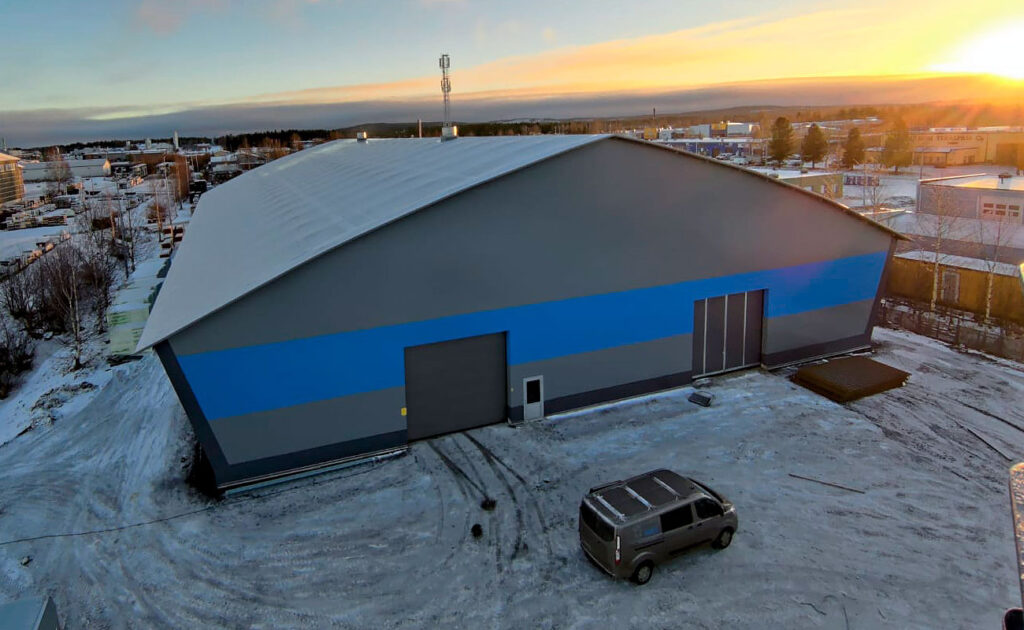
Warmeks manufactures their event tent covers from industrial-grade PVC treated with UV protection and anti-fungal agents, compliant with international flame-retardant regulations. Covers are available in both single-layer and thermo-inflatable PVC configurations — the latter providing thermal insulation that keeps interior temperatures manageable during both cold winters and hot summer events, making Warmeks structures genuinely multi-season.
4. Drainage and Water Management
Rainwater management is frequently overlooked until it becomes a crisis mid-event. Quality event tent engineering integrates active drainage systems directly into the structure’s design — channeling water away from the roof, walls, and base perimeter efficiently to prevent pooling, flooding, and material stress. Warmeks’ drainage systems use corrosion-resistant materials designed to handle high-volume rainfall without compromise, ensuring that a heavy downpour stays outside the tent where it belongs.
What Warmeks Brings to Event Infrastructure
Warmeks is an Estonia-based manufacturer with over 30 years of European engineering heritage, specialising in custom event tents, party marquees, and large-scale temporary structures built for demanding climates. As an official manufacturing partner of Hallix Finland Oy, Warmeks combines trusted Finnish structural engineering with Baltic production efficiency — delivering premium-quality structures at competitive European pricing.
Every Warmeks event structure is designed with fire-resistant certified materials, engineered drainage, insulated PVC panel options for temperature control, and structural configurations tailored to regional wind and snow load zones. Whether you are planning a winter festival in Tallinn, an outdoor trade exhibition in Warsaw, or a corporate gathering in Munich through the colder months, Warmeks provides structures that comply with Eurocode standards and EU public safety requirements from day one.
Their party tents and large marquees are available in custom dimensions and configurations — designed not just for weather resistance, but for acoustic optimisation, branding flexibility, and rapid assembly by trained installation teams.